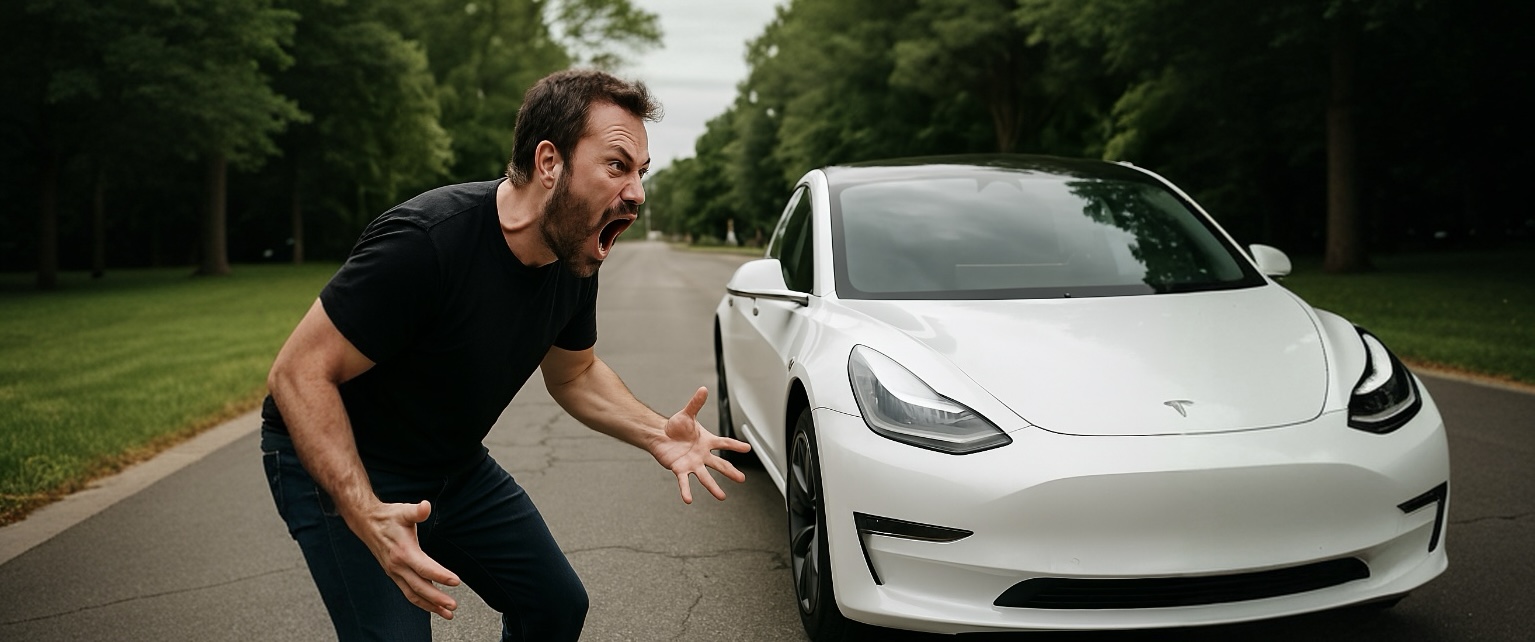
Alright, let’s get more technical with the analogy, using how a Tesla perceives the world and drawing parallels to emotions and reactions in men:
Tesla’s Sensors and Cameras vs. Human Emotions
A Tesla Model X is equipped with an advanced suite of sensors and cameras to understand and respond to the world around it. This includes:
1. 8 Cameras – Providing a 360-degree view of the car’s surroundings.
2. 12 Ultrasonic Sensors – Detecting objects up close, like curbs or other vehicles.
3. Radar System – Measuring the distance and speed of objects in front of the car.
4. Computer Vision and Neural Networks – Analyzing input data to make decisions about speed, direction, and braking.
Now, let’s relate these components to human emotions, feelings, and reactions using real-life scenarios that commonly trigger anger in men:
Scenario 1: Insult Detection
Tesla: When the car detects an obstacle (e.g., a pedestrian stepping onto the street), it processes this input, assesses the situation, and slows down or stops if needed. It sees the situation as a temporary challenge to navigate safely.
Human Parallel: When someone throws an insult, this is like the car’s camera detecting an obstacle. Your brain senses the insult as a threat or challenge, triggering an emotional response (initial anger).
• Proper Response (Autopilot Mode): Just as the Tesla would slow down and navigate safely, you can acknowledge the insult, process it as someone else’s issue, and choose to move on without reacting emotionally.
• Override Reaction: If you “grab the wheel” out of anger, you might escalate the situation by lashing out, leading to an argument or confrontation (chaos). This is like forcing the Tesla to swerve aggressively, risking a collision.
Scenario 2: Not Getting What You Want
Tesla: If the car’s radar detects that a vehicle in front is slowing down or blocking its lane, the autopilot system adjusts speed and looks for a safe opportunity to change lanes.
Human Parallel: When you don’t get something you want (e.g., a promotion, a date, or respect from someone), your brain senses this as a blocked goal, triggering feelings of frustration.
• Proper Response (Autopilot Mode): Like the Tesla safely adjusting speed and seeking another opportunity, you can reframe the situation and seek another way to achieve your goal.
• Override Reaction: If you let anger take over, you might react by making reckless decisions, blaming others, or giving up altogether. This is like forcing the car into a dangerous lane change, risking damage.
Scenario 3: Being Cut Off
Tesla: If another vehicle suddenly cuts in front, the Tesla’s ultrasonic sensors and radar detect this abrupt action. The autopilot responds by adjusting speed and creating a safe distance.
Human Parallel: When someone disrespects you or treats you unfairly, it’s like being cut off. Your brain reacts with a surge of anger, feeling like your space or rights have been invaded.
• Proper Response (Autopilot Mode): Like the Tesla creating safe distance, you can acknowledge the disrespect, maintain composure, and create emotional space to avoid escalation.
• Override Reaction: If you take over the “wheel” with anger, you might retaliate verbally or physically, escalating the conflict into a full-blown confrontation. This is akin to the car accelerating aggressively to chase the offending vehicle, risking a collision.
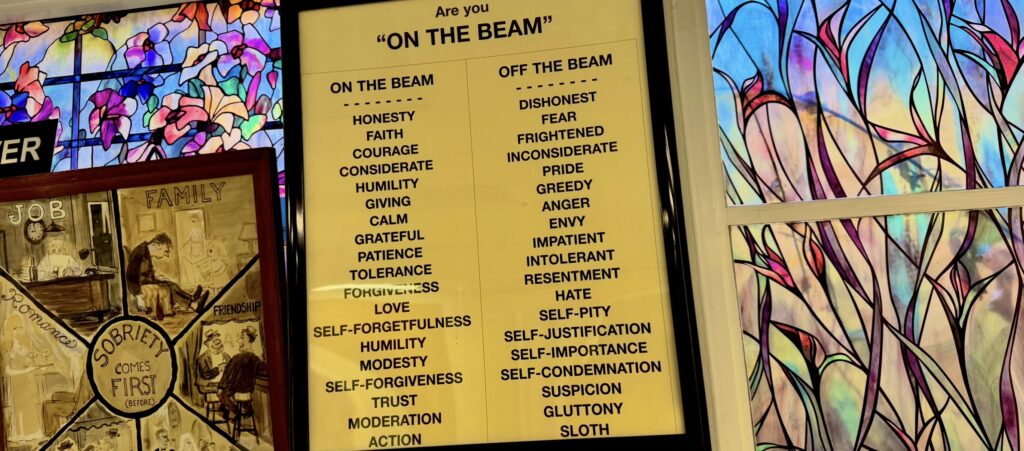
Here’s an analogy using the “On the Beam – Off the Beam” sign as firmware for a Tesla’s computer system, and how it relates to AA principles and maintaining real sobriety:
Tesla Firmware and AA Sobriety: Staying “On the Beam”
Imagine a Tesla computer being programmed with the principles from the “On the Beam – Off the Beam” sign hanging directly behind the chairperson’s table at Gisondi’s Nook. This sign serves as a constant reminder of what’s really important for maintaining real sobriety, not just living day by day without drinking. It outlines the difference between healthy behaviors (honesty, faith, courage, humility) and unhealthy, destructive ones (fear, pride, anger, resentment).
Firmware: The Core Operating System
In a Tesla, the firmware is the car’s core operating system, guiding how it responds to the world. The firmware uses sensor input, data analysis, and algorithms to make smart, safe decisions. This is like the healthy behaviors listed “On the Beam”—honesty, courage, and patience. When we practice these principles daily, we program our mind’s firmware to make healthier choices in life.
• Example: When the Tesla sees an obstacle, it calmly adjusts and navigates around it. When we face challenges in sobriety, we rely on our “On the Beam” firmware to handle situations with honesty, patience, and tolerance.
Override Mode: The Dangers of Living “Off the Beam”
While the Tesla’s firmware is designed for safe driving, the driver can override it and take control. This is like living “Off the Beam”—giving in to destructive impulses like fear, anger, or self-importance.
• Example: If the Tesla driver yanks the wheel out of anger, the car can veer off-course and crash. Similarly, if we let fear or resentment take control, we’re more likely to make harmful decisions that threaten our sobriety and relationships.
Locking in the Firmware: Practice Makes Permanent
The goal of continuing to come to meetings and practicing the AA principles is to make the “On the Beam” firmware more locked into our normal operating mode. Over time, honesty, humility, and patience become our default settings.
• Just as a Tesla gets smarter with every mile it drives, we get stronger in sobriety with each day we consciously choose to live “On the Beam.” By reinforcing these positive behaviors, we make it harder to be overridden by negative impulses like fear, pride, or anger.
In AA, real sobriety isn’t just about avoiding a drink day by day. It’s about letting the healthy principles on the sign behind the chairperson’s table become our core operating system—guiding our decisions, reactions, and ultimately leading to a better life.
Key Takeaway
The Tesla is designed to keep passengers safe by calmly navigating around obstacles. It collects and processes raw data (emotions) and turns it into rational actions (feelings and responses). When you override the system with anger, you introduce chaos and danger, just like a driver jerking the wheel out of autopilot control.
Anger is not the problem—the problem is choosing to override rational thinking and acting impulsively. Trust the “autopilot” within you that guides you toward the best outcome, even when the road gets challenging.