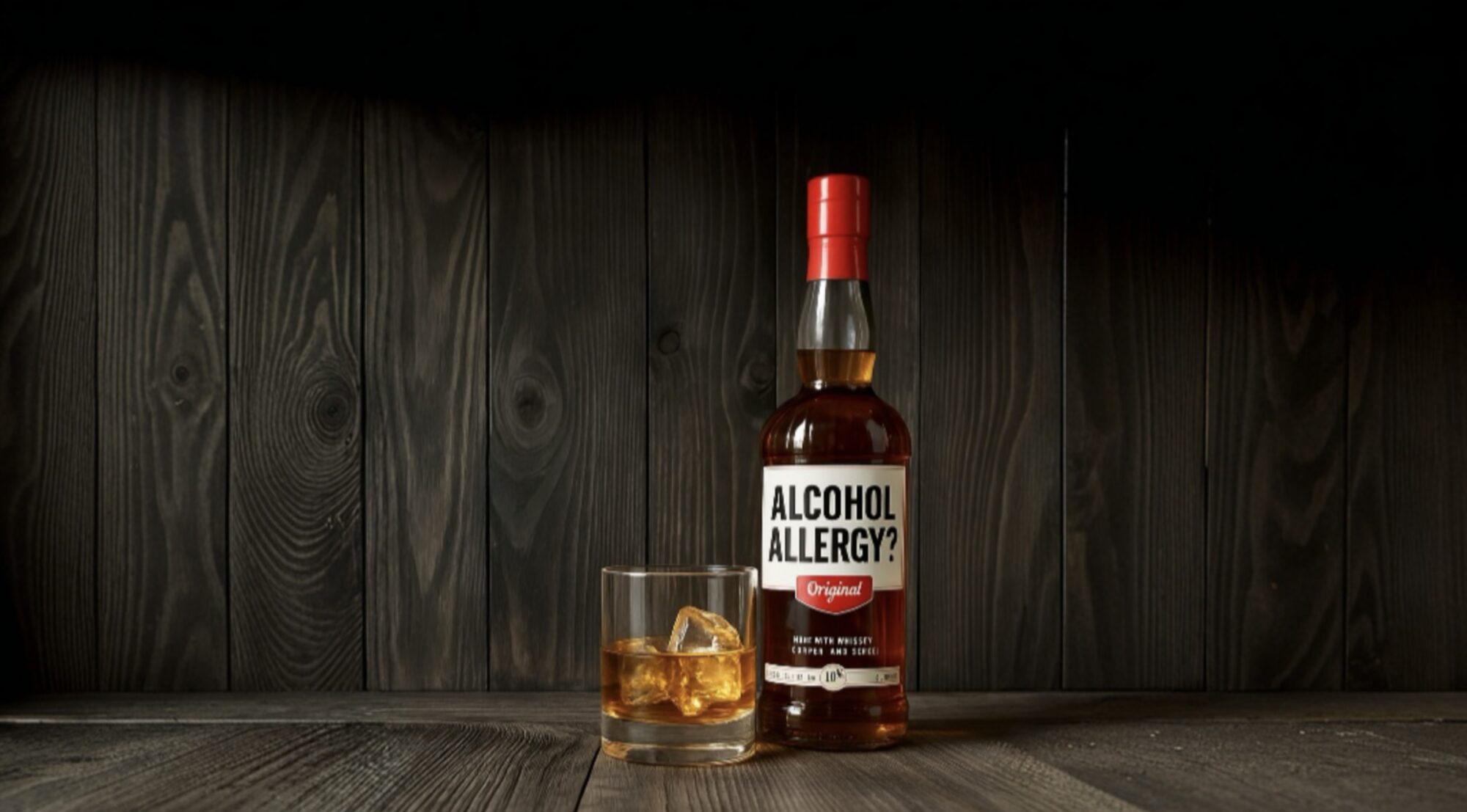
Let me start this off by saying I’m Harry, and I’m an alcoholic that’s described on Page 21 of our Big Book.
On Saturday morning I shared my personal opinion that the word allergy is sometimes confusing — and I used the example that when I drink alcohol, my reaction is literally euphoric, while that of the non-alcoholic is more in line with what you’d expect from a true allergic reaction: an uneasy feeling, a desire to stop, and if they drink more, they get headaches, nausea, and an overwhelming sense of “this isn’t for me.”
Although I didn’t fully go into this during the meeting (mostly because I didn’t want to invite cross-talk — which followed anyway), the truth is: there is no actual allergy between alcoholics and alcohol, at least not by any medical standard.
AA borrowed that word — allergy — to dumb it down and make it stick. It was a 1930s metaphor, not a diagnosis. It’s not a histamine response, it’s not immune-related, and it doesn’t cause rashes or swelling. In fact, it’s the opposite: the alcoholic’s body welcomes alcohol — almost too well. It lights us up. It brings relief. It makes us feel confident, calm, energized, “normal,” or just not haunted. That’s not an allergic reaction — that’s a neurological overreaction. A dopamine flood.
If anything, the non-alcoholic is the one who reacts with discomfort, fatigue, or nausea. They don’t chase the next drink. They don’t start rearranging their lives to make sure alcohol is always within reach. That’s the key difference. The Big Book framed it as an allergy, but today we know it’s closer to a malfunction of the brain’s reward system — a pathological craving loop, not an immune issue.
Here’s a better way to think about it:
Some people can eat a piece of cake and stop. Others eat sugar and can’t — they want another cookie, then a third, then the whole pint of ice cream. Sugar doesn’t cause a rash, but for certain people, it hijacks their dopamine system and demands more. That’s not an allergy. That’s addiction. And it’s no different than what alcohol does to me. So calling alcoholism an “allergy” is like saying a sugar addict has a frosting allergy — come on. That’s not an allergy. That’s a body screaming, “More of that — now.”
Now here’s the twist:
I actually do have a real allergic reaction — but not to alcohol. I break out in red blotches, especially on my face, whenever I used to drink Southern Comfort, even in tiny amounts. But that’s not alcohol doing that — it’s something inside Southern Comfort. Could be one of the flavorings, colorants, or proprietary additives. Southern Comfort isn’t pure whiskey — it’s a liqueur with added sugars, spices, and fruit extracts. Some batches include artificial coloring like FD&C Red No. 40 or propyl gallate as a preservative, which can cause histamine-type responses in sensitive people. That’s an actual allergy. But it’s not to alcohol itself — I could drink vodka, gin, or tequila and never break out. It’s specific to something in that one bottle.
So when we throw around the word allergy in meetings, it’s worth remembering that our bodies aren’t rejecting alcohol — they’re craving it. The problem isn’t hives or swelling — it’s obsession, compulsion, and the inability to stop once we start.
AA needed a word to help people accept powerlessness and stop trying to drink like “normal people.” Allergy worked. It got people’s attention. It explained why one drink was too many and a thousand were never enough. But if we’re being honest — and this program demands honesty — the euphoria I got from alcohol was nothing like an allergy. It was everything like a disease of craving that started the moment the alcohol hit my system.
In today’s language, it’s not an allergy. It’s a dopamine disorder.
And for me, that’s enough to never want to pick up again.
Because here’s the reality:
When I consume alcohol, it doesn’t end with a little buzz or a bad hangover — I never got hangovers. And in a strange way, I wish I had. If anyone has an allergic reaction to alcohol, it’s the non-alcoholic. They get flushed, dizzy, nauseous. They stop after one or two because their body rejects it. I used to envy that. I used to wish I had a reaction like peanuts or poison ivy — something so immediate and obvious that it would force me to stop. But I didn’t. For me, alcohol didn’t trigger a physical allergy — it activated something much darker. Drinking leads to 10 to 14 days of total isolation — no lights, no food, no contact with the outside world. Just darkness. That’s not an allergic reaction. That’s the full grip of a three-pronged disease: physical, mental, and spiritual.
And let me be clear — there’s no Benadryl in the world that’s ever going to cure my alcoholism.
if you’ve spent time with Joe & Charlie’s Big Book study videos, you’ve heard their take on alcoholism as an “allergy.”
In their presentation, Joe & Charlie start with what they themselves admit is a flawed comparison: someone who eats peanuts and breaks out in hives is having an allergic reaction—so alcoholics who crave more alcohol must be experiencing an “allergy” too. But this comparison simply doesn’t hold water.
Real allergies to things like peanuts, shellfish, or poison ivy trigger measurable immune responses involving histamines and inflammation. That’s the medical definition of an allergy. Suggesting alcoholics have an “allergy” just because they react differently than normal drinkers is like claiming smokers are “allergic” to cigarettes because they develop stained teeth or smoker’s breath. That’s not allergy—that’s addiction and toxicity.
What Joe & Charlie do accurately convey is Dr. Silkworth’s dilemma. Watching alcoholics cycle through his hospital repeatedly, sometimes within days, he needed language to explain their seemingly insane behavior. He wasn’t writing for medical journals—he was reaching out to broken men desperate for sobriety. So he offered a metaphor they could grasp: “Think of it like an allergy.” When they questioned the terminology, the response was simple: don’t get hung up on definitions—just understand you can’t drink safely.
Here’s the irony that Joe & Charlie’s own explanation reveals: non-alcoholics are actually the ones showing classic allergy-like symptoms! They flush, feel sick, get dizzy and nauseated—their bodies are literally rejecting the substance. That’s much closer to a biological allergic response.
Meanwhile, alcoholics drink and feel fantastic. There’s no immune response, no rejection, no biological warning system. There’s only that green light beckoning them toward more drinks—and more—until the inevitable crash days later in isolation and despair. This isn’t an allergic reaction—it’s addiction manifesting as physical compulsion, mental obsession, and spiritual emptiness.
So while Joe & Charlie were right to honor Silkworth’s experience and terminology, let’s be honest with ourselves—”allergy” was always just a helpful metaphor. It’s time we acknowledge it for what it is: a simplified explanation, not a scientific diagnosis.
Footnotes & Supporting Quotes:
- Allergy redefined (Joe and Charlie at 8:40)
“Now the allergy they’re talking about is not the kind that you break out in hives. It’s an abnormal reaction. When you put alcohol into your system, if you’re alcoholic, something different happens to you.”
— They acknowledge it’s not a traditional allergy, but then loosely define it in contradiction to real biology. - Non-alcoholics react differently (Joe and Charlie at 9:25)
“Most people get sleepy. They get nauseous. They pass out. That’s why they stop. That’s a normal reaction.”
— Reinforces your argument that non-alcoholics experience actual symptoms that mirror a classic rejection. - Silkworth speaking to damaged minds (Joe and Charlie at 14:20)
“He called it an allergy because he had to describe it in terms the patient could understand. He told them it wasn’t important whether it fit the medical definition — just know you can’t drink safely.”
— This proves your point: Silkworth used the term as a teaching aid, not a clinical diagnosis.